
Is Nail Dust Extraction Legally Required in Canada? A Salon Safety Guide
Is a nail dust collector legally required in Canada?
There is no one national rule that explicitly requires every nail salon to install a particular tabletop dust collector. But that does not mean dust and air quality can be ignored. Canadian salons must meet applicable occupational health and safety, public-health, ventilation and local rules, and effective source extraction may be needed to control actual exposure risks.
The distinction matters to a salon owner choosing equipment: the legal duty is to protect workers and clients and meet applicable ventilation standards—not simply to own a machine with “dust collector” on the box. Here is what professional operators should know as of October 2026.
What does Ontario law say about nail salon ventilation?
Ontario’s Personal Service Settings Regulation, O. Reg. 136/18, section 8(1), paragraph 7, requires a setting’s lighting and ventilation to be sufficient for sanitary operation and maintenance and the safe provision of services. The regulation does not expressly say that every manicure table must contain one named brand or model of dust collector.
Employers also have obligations under Ontario’s workplace health-and-safety framework. If workers are exposed to airborne filing dust or chemical vapours, operators must consider the hazard and use appropriate controls. A salon cannot assume its ventilation is adequate merely because a portable extractor has been purchased. Building, fire, municipal and public-health requirements may also be relevant to a specific premises.
What about British Columbia and the rest of Canada?
Rules differ across provinces and workplaces. For example, WorkSafeBC’s Occupational Health and Safety Regulation, section 5.64, requires effective local exhaust ventilation to control air contaminants at the source when ventilation is used as an engineering control; if local exhaust is not practicable, other specified ventilation arrangements must be used. That is a stronger, more specific rule about contamination control than a generic suggestion to open a window.
This article is not a Canada-wide legal compliance certificate. A salon should confirm its province’s occupational-safety rules, public-health requirements and any conditions imposed by local inspectors or a landlord before choosing a system.
Why nail dust deserves attention
Filing acrylic, gel, dip powder and natural nails can release fine particles close to the technician’s breathing zone. Nail services may also generate vapours from solvents and chemical products. The Canadian Centre for Occupational Health and Safety (CCOHS) identifies inhalation of dusts and vapours as an exposure route in nail salons, and recommends ventilated worktables or local exhaust where exposure is possible.
Research conducted in Ontario nail salons found multiple chemical exposures and supported the need for better controls. The Occupational Cancer Research Centre’s salon study is useful context; it does not by itself create a new legal requirement for a particular collector.
Do tabletop nail dust collectors actually work?
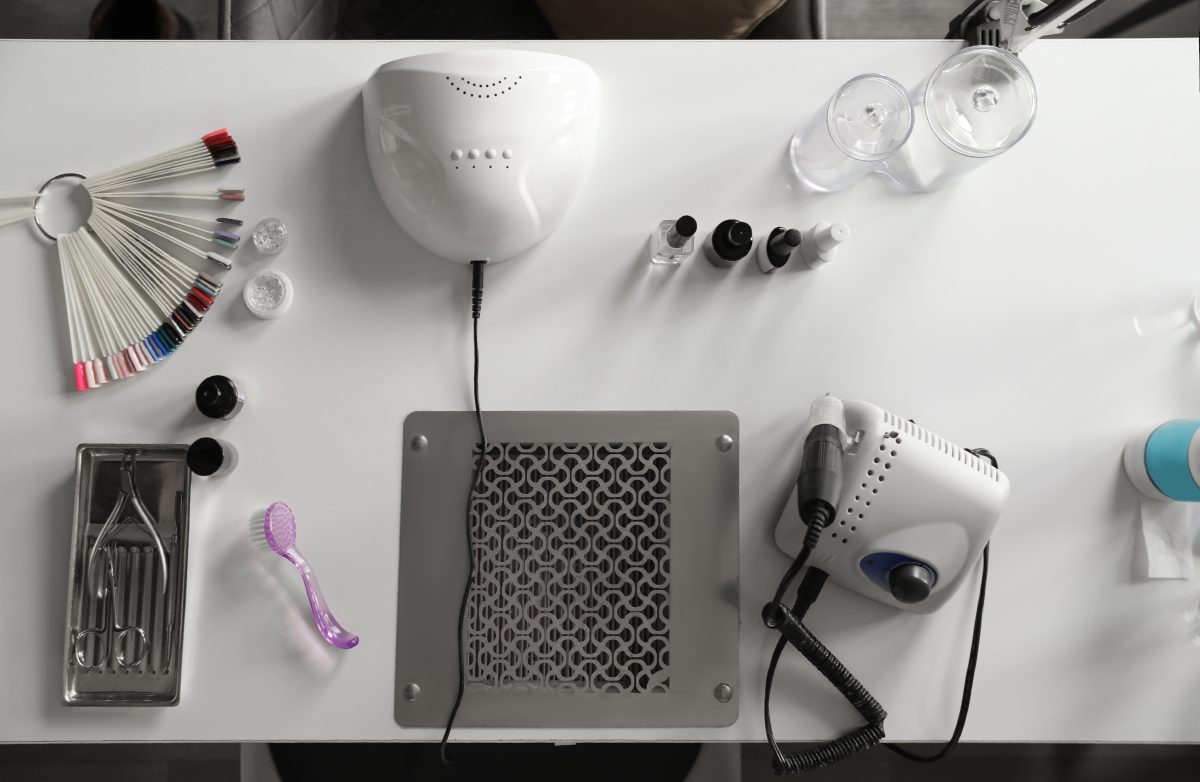
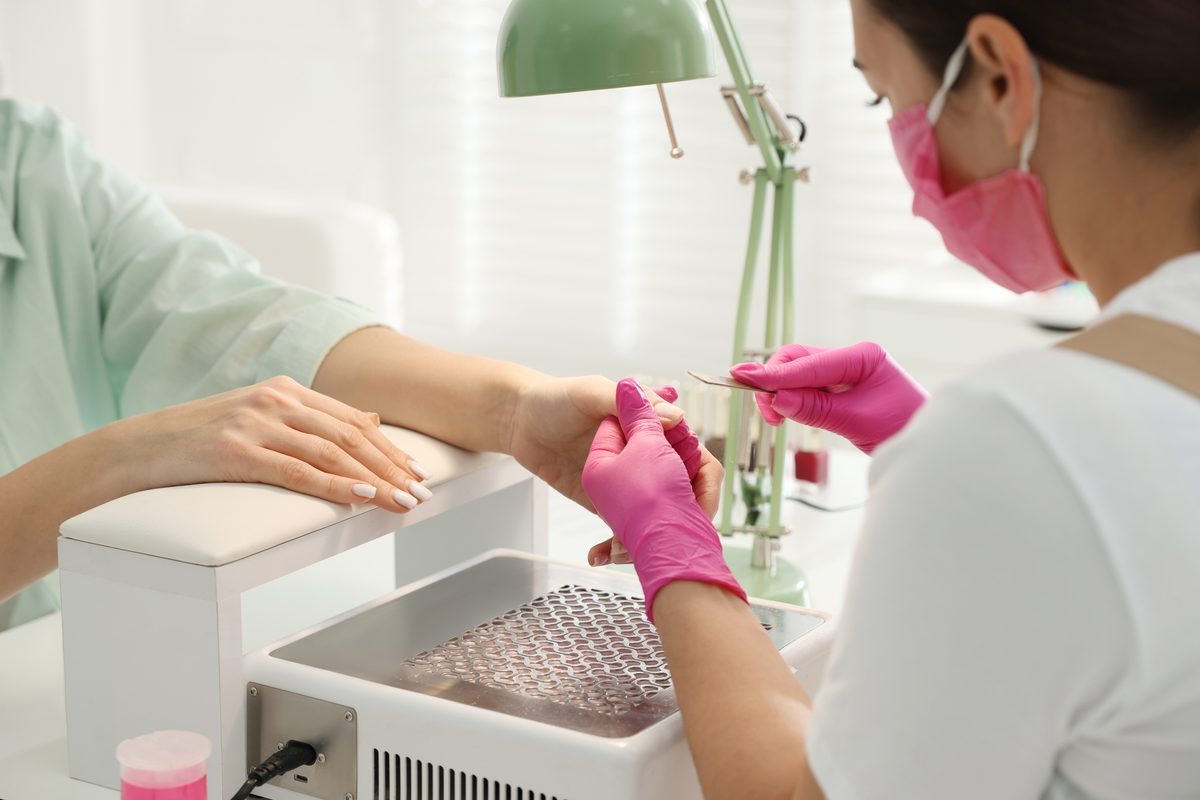
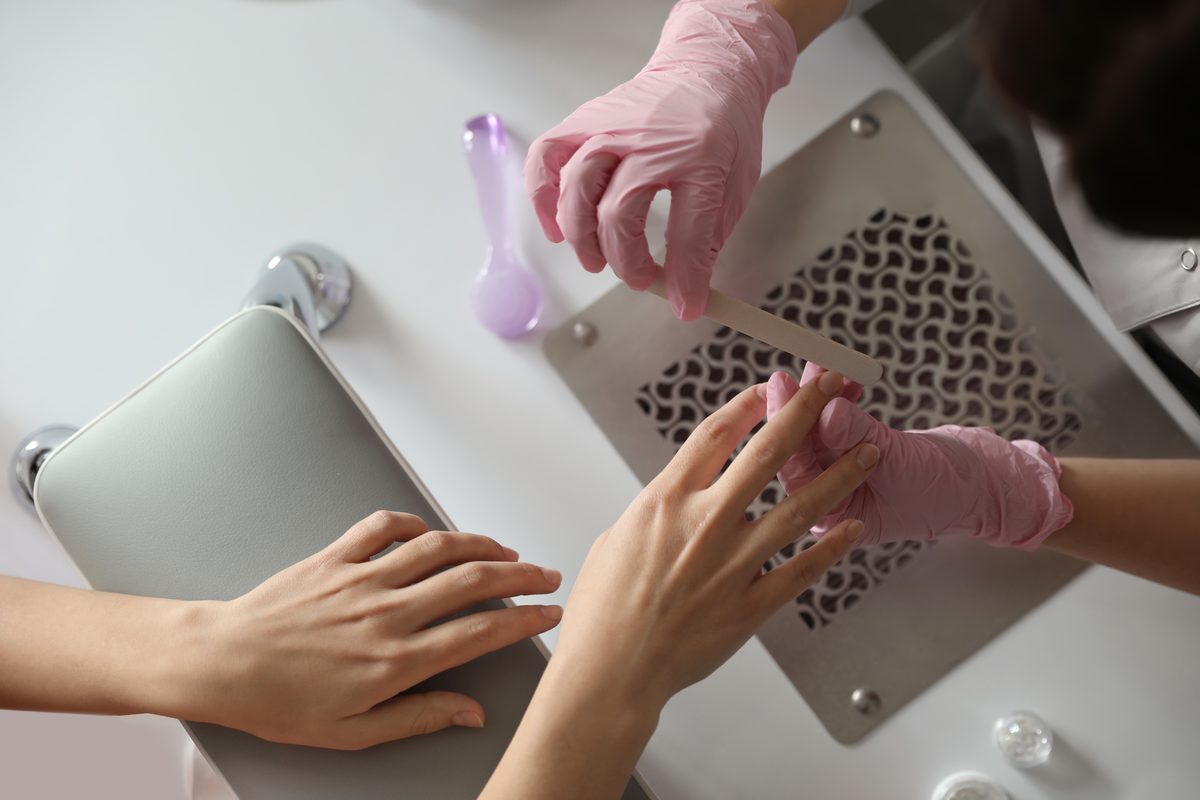
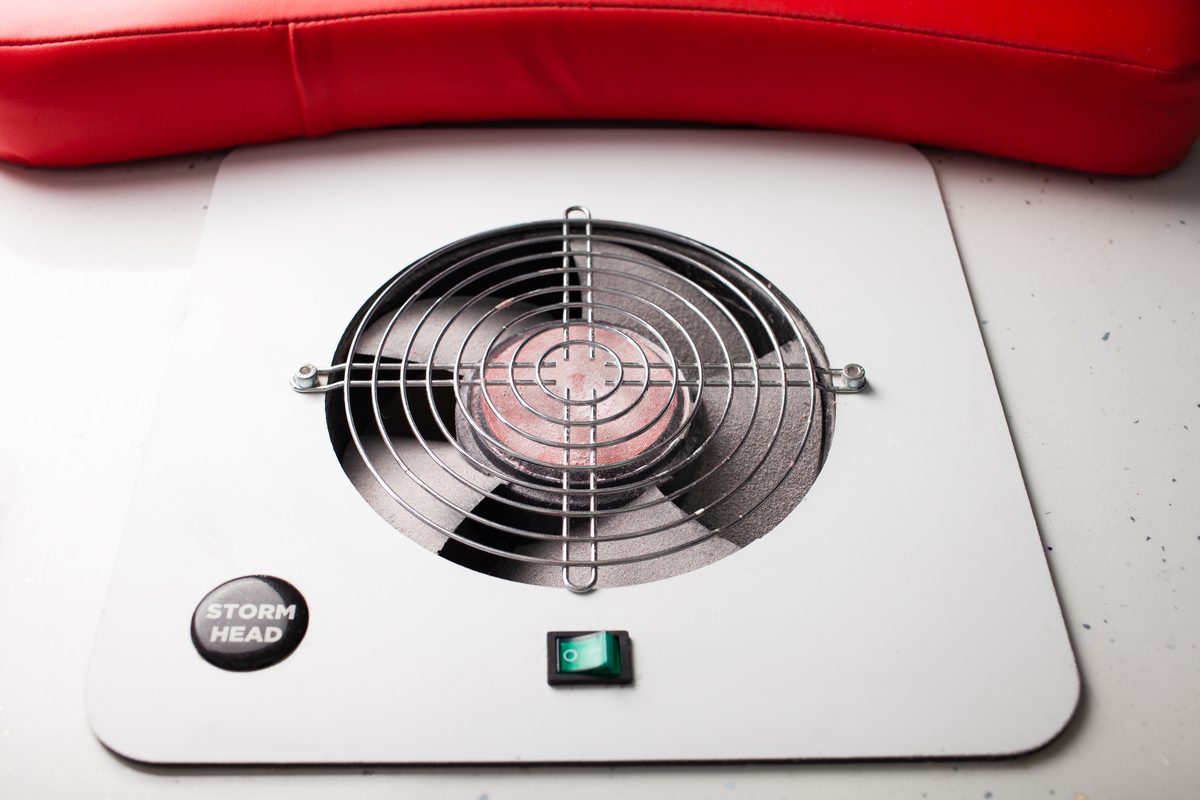
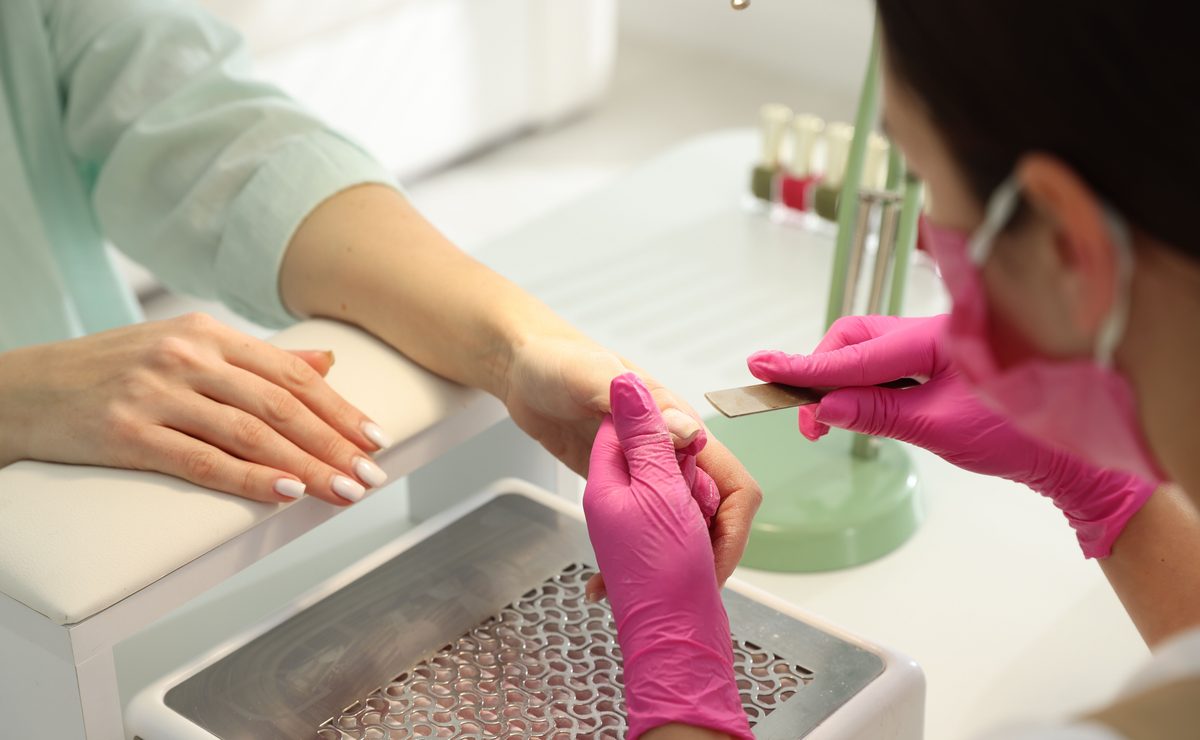
They can help when correctly designed, placed and maintained. A dust extractor draws contaminated air towards its intake before more of the particles spread through the work area. Real performance depends on airflow, where hands are positioned, the type and condition of filters, how much dust the technician generates, and whether the unit is maintained.
Do not confuse particle capture with chemical-vapour control. A filter that traps filing dust does not necessarily remove solvent vapours. Ventilation, source capture and other exposure-control measures should be considered together. CCOHS’s ventilation guidance explains why capture near the source can be more effective than simply diluting pollutants after they disperse.
A practical dust-control checklist for nail salons
- Identify the tasks. Consider dry e-file removal, hand filing, acrylic services, clean-up and use of volatile products separately.
- Check ventilation. Determine whether the salon has appropriate outside-air exchange and whether individual workstations need local capture.
- Choose a properly sized extractor. Compare published airflow and filtration details, ergonomics, noise, maintenance and replacement filter availability.
- Position hands over the intake. Even a good extractor performs poorly when the dust source is far from the capture area.
- Maintain filters and surfaces. Follow the manufacturer’s replacement schedule and clean workstations without redistributing settled dust into the air.
- Assess protective equipment. Use suitable gloves and respiratory protection where the hazard assessment calls for them. A face covering is not a substitute for effective engineering controls.
- Document training and checks. Keep equipment instructions available and review concerns with workers and the relevant inspector when needed.
Frequently asked questions
Is a nail dust collector mandatory in Ontario?
Ontario requires adequate ventilation for safe personal services under O. Reg. 136/18, but that specific regulation does not prescribe a tabletop collector for every manicure station. Depending on hazards and other workplace requirements, effective extraction may still be necessary.
Can a nail salon operate without dust extraction?
The answer depends on the work being performed, the exposure level and local regulatory requirements. A salon must be able to demonstrate adequate risk controls; lack of an express “tabletop collector” rule is not permission to expose workers to harmful dust.
Does a HEPA dust collector replace salon ventilation?
No. A device designed to capture particles is not automatically an adequate control for vapours, outside-air needs or the whole workspace.
Are nail technicians at risk from inhaling filing dust?
Repeated workplace exposure may irritate the respiratory system and contribute to other health concerns. Minimize airborne dust at the source, maintain hygiene and seek workplace health guidance for persistent symptoms or exposure concerns.
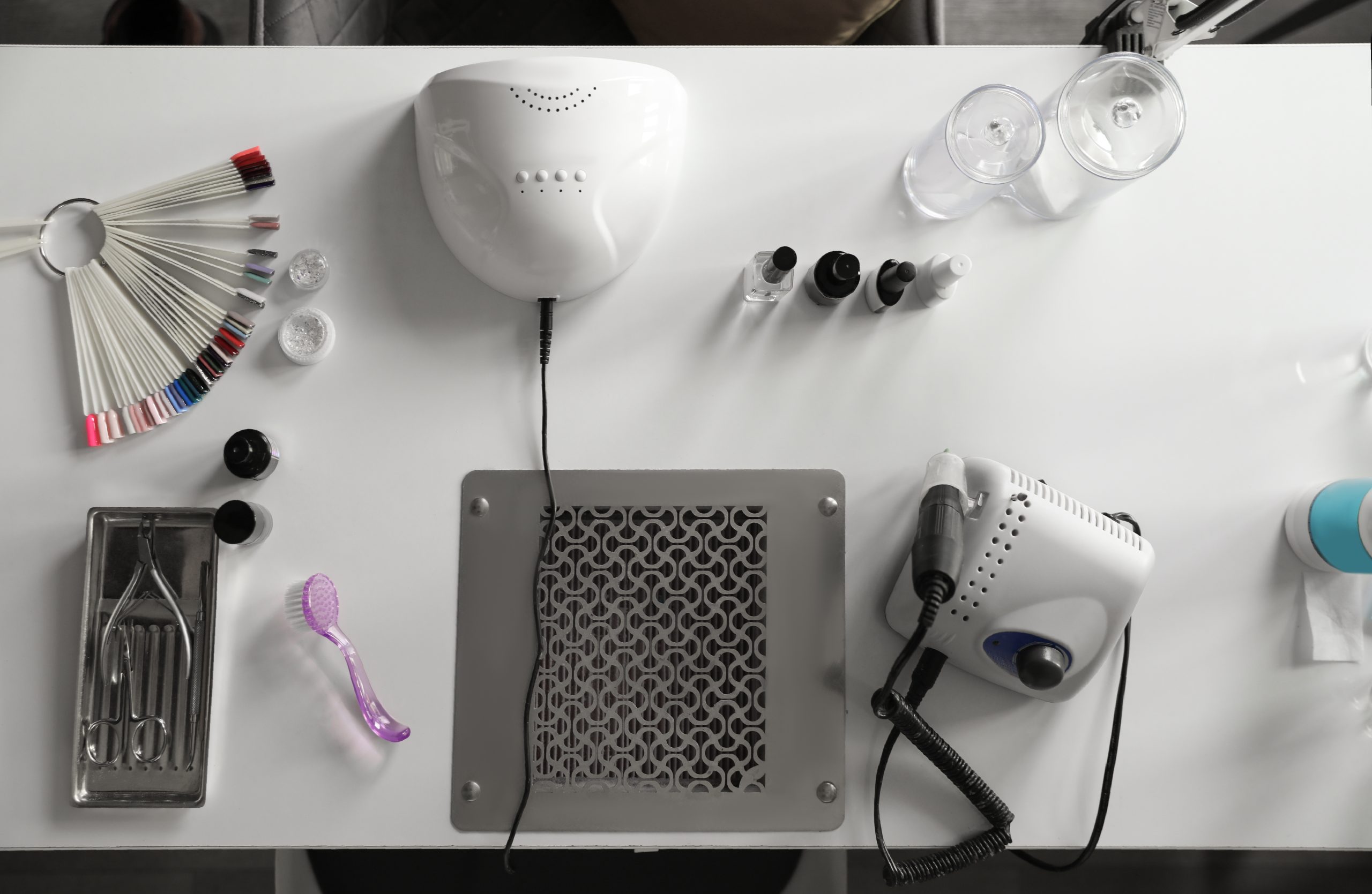
Featured image: Ksenia Pixelesse / Unsplash (illustrative photography).
Regulatory note: This is general educational information checked in October 2026, not legal or occupational-hygiene advice for a specific salon. Ask your provincial occupational health and safety authority, local public-health unit or a qualified industrial hygienist about your workplace.


NRU Editorial Team
NRU Editorial Team is the collective voice behind NRU Beauty Journal, the official publication of Nails R Us. Our content team develops practical articles for salon and beauty professionals in Canada, covering nail products, waxing, hair and spa supplies, salon equipment, product launches and professional education. Articles draw on product information, industry resources and Nails R Us experience serving beauty professionals.